
Introduction
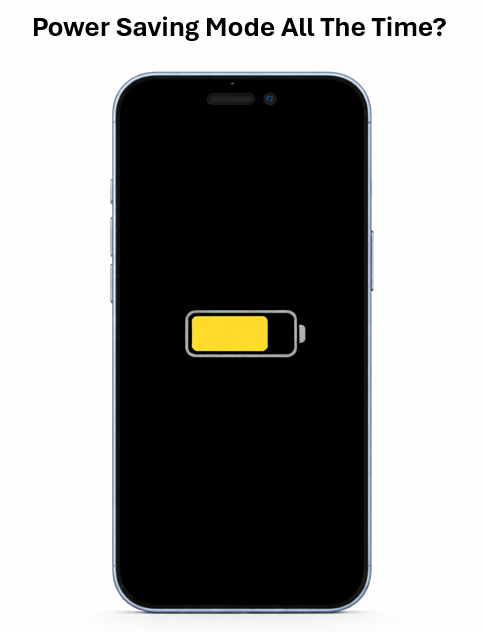
I often see many of my friends keeping Power Saving Mode turned on all the time on their iPhones. The reason is simple — people believe that enabling Power Saving Mode will extend battery life. While this is partly true, there are several trade-offs that come with using this feature continuously.
In this article, we will explore how Power Saving Mode actually works on iPhone, its advantages and disadvantages, and what really happens if you keep it enabled all the time. By the end, you will have a clearer idea of how to use Power Saving Mode properly in your daily routine.
How Power Saving Mode Works on iPhone
Power Saving Mode, known as Low Power Mode on iPhone, was introduced to help extend battery life when the battery level gets low.
On iPhone, Low Power Mode does not turn on automatically. Instead, the device prompts you to enable it when the battery level drops to around 20%. Once the iPhone is charged to around 80%, Low Power Mode automatically turns off.
But how does this mode actually work?
When Low Power Mode is enabled, iOS makes several adjustments to reduce power consumption. One of the first things you will notice is reduced screen brightness. Background activities such as app refresh run less frequently, which helps conserve battery power.
Some system processes such as mail fetching, background downloads, and certain syncing tasks are temporarily limited. Visual effects and animations are also reduced slightly so the iPhone can focus on essential tasks while consuming less power.
All these changes help the iPhone extend battery life when power becomes limited.
When Power Saving Mode Is Useful
Low Power Mode can be very useful in several situations.
For example, when your iPhone battery drops below 20% and you don’t have a charger nearby, enabling Low Power Mode helps you get the most out of the remaining battery.
It can also be helpful while traveling. Imagine someone hiking or traveling in remote areas where access to a charger or power bank is limited. In such situations, Low Power Mode can extend the device’s battery life significantly.
Some users also enable Low Power Mode after charging their iPhone so that the battery lasts longer throughout the day. Apart from that, in emergency situations where conserving battery becomes important, Low Power Mode can be a very practical option.
What Happens If You Keep Power Saving Mode On All the Time
Now coming to the main question — what happens if you keep Low Power Mode enabled all the time on your iPhone?
Keeping Low Power Mode on continuously is generally not recommended unless you are in a situation where charging is not available for a long time. While Low Power Mode does help extend battery life, using the iPhone with it enabled all the time can feel slightly restrictive.
When Low Power Mode is active, overall system performance may feel slower. You might notice small delays while opening apps or performing heavier tasks. Background activities run less frequently and some notifications may appear later than usual.
Certain visual features such as animations may also appear less smooth. These adjustments are intentional, as the system is trying to conserve battery power.
However, it is important to understand that keeping Low Power Mode enabled does not damage the battery. It simply limits certain features and performance in order to save power.
Conclusion
Low Power Mode is a useful feature designed to help iPhone users extend battery life when it is needed the most. It works by limiting background activities, reducing brightness, and adjusting system performance to conserve power.
While keeping Low Power Mode enabled all the time will not harm your battery, it is not always necessary for everyday use. Since it slightly reduces performance and delays certain background tasks, it is best used only when your battery is running low or when you need your iPhone to last longer without charging.
In simple terms, Low Power Mode is a helpful tool — but it works best when used wisely rather than permanently.